Kyphoplasty
Kyphoplasty is a minimally invasive surgical procedure used in cases of severely disabling pain caused by a vertebral fracture. It stabilizes the fracture to treat pain and prevent progressive deformity. These fractures often result from osteoporosis, trauma, or certain cancers that weaken the bones.
During kyphoplasty, a small balloon is inserted into the fractured vertebra, gently inflated to restore height, and then filled with medical-grade bone cement. This stabilizes the bone, reduces pain, and can help correct spinal deformity.

Who Benefits from Kyphoplasty
Kyphoplasty may be recommended if you have:
- Sudden back pain following a minor fall, bending or lifting
- Pain that worsens with movement but improves when lying down
- Noticeable loss of height or a stooped posture (kyphosis)
- X-ray or MRI confirmation of a recent vertebral compression fracture
- Pain that does not improve after several weeks of conservative treatment such as rest, bracing or medication
Note: Kyphoplasty is generally performed for recent fractures (within about 8-12 weeks) rather than old, fully healed fractures
What to Expect
- Preparation: You may need imaging tests (X-ray, MRI) and will be asked not to eat or drink for several hours before the procedure. Blood-thinning medications may need to be paused.
- Anesthesia: Typically done under local anesthesia with sedation or, in some cases, general anesthesia.
- Technique:
- A small incision is made in the back.
- A hollow needle is guided into the fractured vertebra under X-ray.
- A tiny balloon is inserted and gently inflated to restore height.
- The balloon is removed, and the space is filled with bone cement to stabilize the vertebra.
- Duration: Usually 45–60 minutes for one vertebra; longer if multiple levels are treated.
- You will be monitored afterward and usually discharged the same day.
After the Procedure
- Immediate Effects: Many people notice significant pain reduction within house.
- Incision Care: A small bandage is applied; stitches are rarely needed.
- Mobility: Most patients walk soon after the procedure.
Recovery and Aftercare
- Activity: Light activity can typically be resumed within a day. Avoid heavy lifting or strenuous exercise for at least one week or as advised by your physician.
- Pain Management: Mild soreness at the incision site is common and usually resolves in a few days.
- Follow-Up: Your doctor may recommend physical therapy or osteoporosis treatment to prevent future fractures.
- Monitoring: Watch for unusual symptoms such as fever, increasing pain, numbness, or weakness, and report them promptly.
Risks and Considerations
Kyphoplasty is generally safe, but possible risks include:
- Bleeding or infection
- Leakage of bone cement outside the vertebra (usually without symptoms)
- Rare nerve injury or allergic reaction to materials
- Risk of new fractures in adjacent vertebrae if underlying osteoporosis is not treated
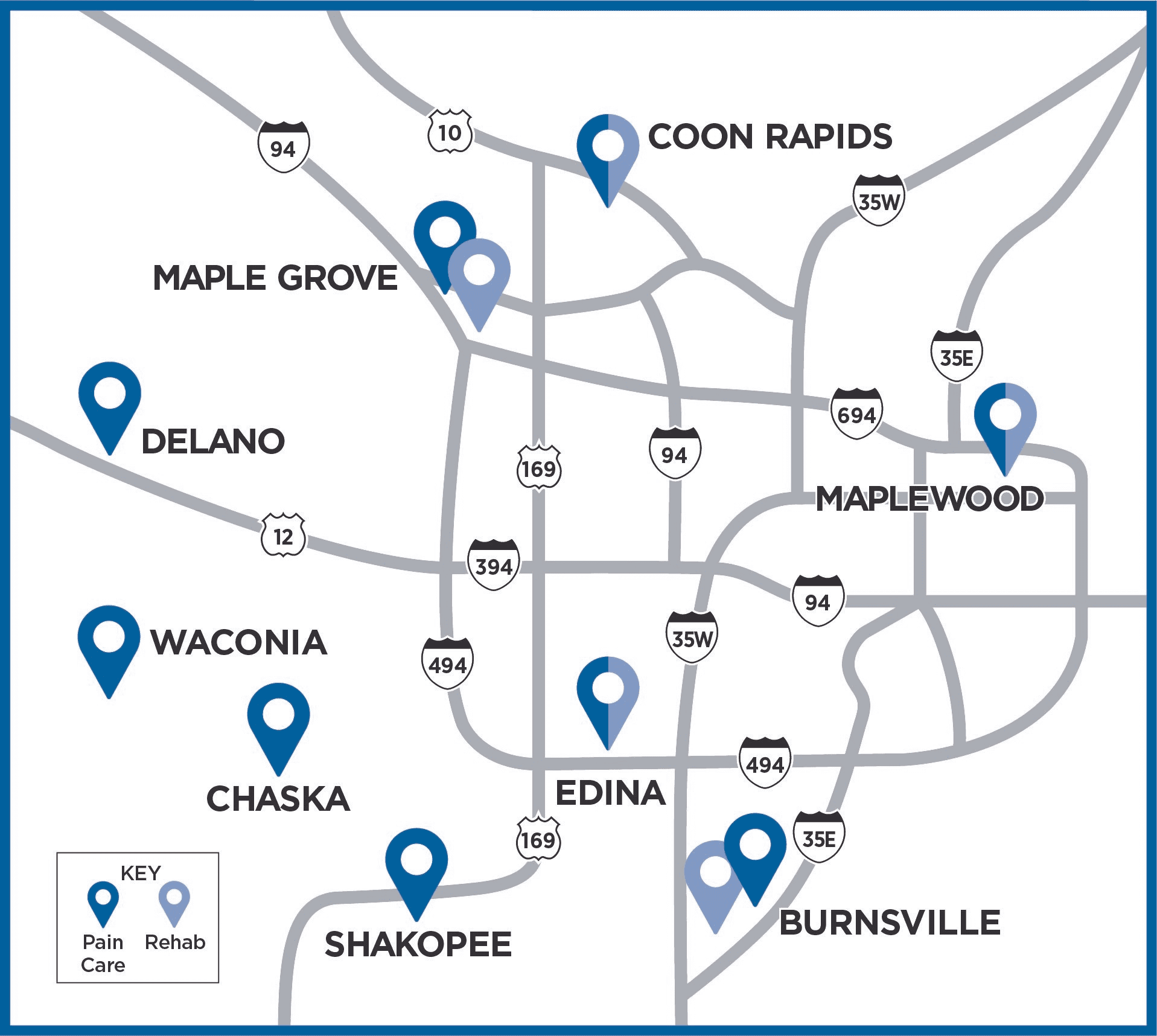
Explore the Twin Cities Metro Clinics where we evaluate patients for Kyphoplasty
*iSpine Clinic locations where Kyphoplasty procedures conducted